

Thai–Cambodian Fighting Continues Despite Trump’s Claim of Ceasefire Agreement
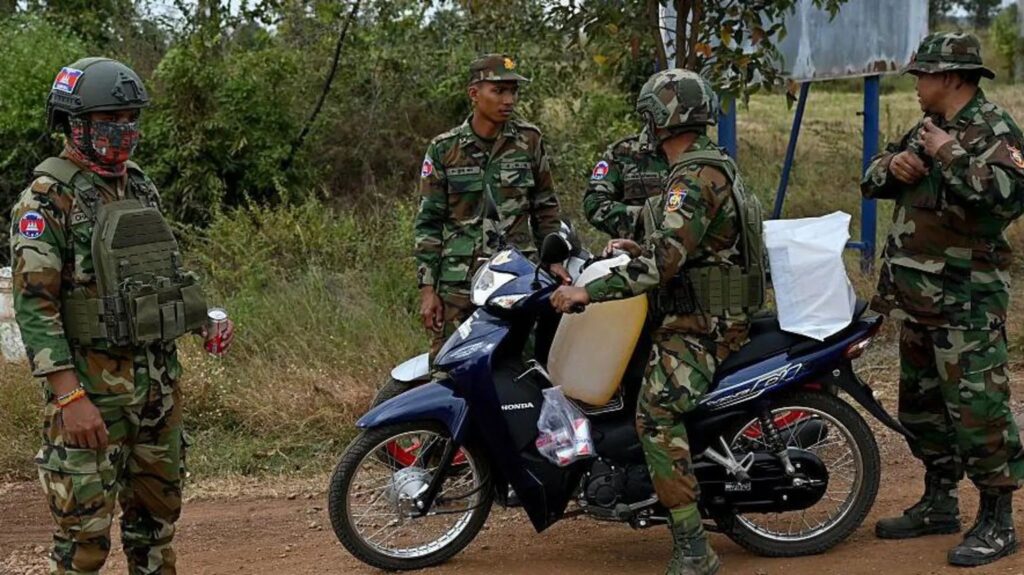
Fighting between Thailand and Cambodia continued into the early hours of Saturday, just hours after claimed the two sides had agreed to a ceasefire.
Thailand’s Prime Minister, , said he made it clear to Trump that any ceasefire would only be possible if Cambodian forces fully withdrew from disputed areas and removed landmines along the border.
In a social media post, Anutin stated that Thailand would press ahead with military operations until it no longer perceived threats to its territory or citizens. “Thailand will continue military actions until we feel no more danger to our land and people,” he wrote, adding that developments on the ground already reflected the country’s position.
Despite claims of an agreement, both sides reported ongoing exchanges of artillery fire and bombing across the border on Saturday. Cambodia’s defence ministry accused Thailand of using fighter jets to bomb hotel buildings and a bridge, while Thai authorities said several civilians were wounded by Cambodian rocket attacks.
Officials say at least 21 people have been killed, while around 700,000 residents have been forced to flee their homes on both sides of the border as the violence escalates.
Earlier in the week, Trump had asserted that he could halt the conflict simply by intervening diplomatically. After speaking with both prime ministers on Friday night, he announced online that Thailand and Cambodia had agreed to “cease shooting effective this evening” and return to the ceasefire deal signed in October under US auspices. “Both countries are ready for peace,” he wrote.
However, statements from both governments following those conversations made no reference to an immediate ceasefire. Anutin reiterated that Thailand was not the aggressor and insisted Cambodia must first demonstrate concrete steps, including troop withdrawal and the clearing of landmines. “They must show us first,” he said.
Cambodian leaders, meanwhile, maintained that their forces would continue fighting to defend national sovereignty.
There was also no indication that trade measures or tariffs — previously used as leverage in July — were being considered to pressure either side. Thailand has warned Washington against linking the conflict to trade issues.
On Saturday, Cambodia reported further air strikes, claiming that Thai F-16 fighter jets dropped seven bombs on multiple targets. “Thai military aircraft have not stopped bombing,” Cambodia’s defence ministry said in a statement posted on X. The Thai military later confirmed that clashes were still ongoing.
The latest escalation stems from a long-running border dispute that intensified on 24 July, when Cambodia launched rocket attacks into Thailand, prompting retaliatory Thai air strikes. Both nations accuse each other of starting the hostilities.
After several days of fierce fighting that left dozens dead, the two Southeast Asian neighbours previously agreed to an “immediate and unconditional ceasefire” brokered by Trump and Malaysian Prime Minister . That deal was formally signed at a ceremony in Malaysia in October, overseen by the US president.
Despite the agreement, accusations of violations persisted. Thailand released evidence alleging Cambodian troops had planted new landmines, incidents that resulted in seven Thai soldiers losing limbs. Cambodia denied the claims, arguing the mines were remnants of its civil war in the 1980s.
Tensions have continued to simmer since then. This week, Thailand launched air strikes inside Cambodia after two Thai soldiers were injured in a skirmish, prompting Cambodia to respond with rocket barrages. The fighting has affected six provinces in northeastern Thailand and six provinces in northern and northwestern Cambodia.
The two countries have disputed their 800-kilometre border for more than a century. The boundary was drawn in 1907 by French cartographers during the colonial era, when Cambodia was under French rule — a legacy that continues to fuel tensions today.