

- Oil marketers resist lowering petrol prices despite Dangote Refinery’s benchmark of N739 per litre
- High logistics costs hinder price reductions, as independent marketers struggle with supply chain challenges
- The competition intensifies, with some stations offering petrol below Dangote’s rates across several cities
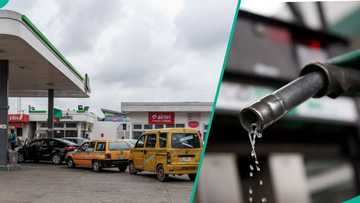
Despite rising competition in Nigeria’s downstream petroleum sector, many oil marketers are resisting calls to slash the retail price of Premium Motor Spirit (PMS), commonly known as petrol, below the Dangote Petroleum Refinery’s benchmark price of N739 per litre.
The resistance comes months after the Dangote Refinery cut its ex-depot petrol price from about N900 per litre to N739 in December, a move that triggered a price war across major cities and put pressure on fuel retailers to adjust or risk losing customers.

Credit: Bloomberg/Contributor
Source: Getty Images
While some filling stations responded by lowering prices to attract motorists, many others have maintained higher pump prices, selling petrol between N740 and N800 per litre, depending on location and logistics.

Read also
Petrol price war deepens as marketers undercut Dangote, sell below N739 per litre
Logistics costs remain a major factor
Independent marketers say the key reason behind the price gap is the high cost of transportation and distribution, particularly for stations located far from major supply hubs.
According to the spokesperson of the Independent Petroleum Marketers Association of Nigeria (IPMAN), Chinedu Ukadike, many filling stations operated by independent marketers are situated on the outskirts of cities and rural areas, making product movement more expensive.
“Most of our members have filling stations on the outskirts, and it costs a lot to move petroleum products from one part of Nigeria to another,” Ukadike said. “We are doing our best to sustain supplies at filling stations, but these logistics costs must be reflected in pump prices.”
Industry players note that factors such as road conditions, haulage fees, security concerns, and storage expenses significantly affect final retail prices, even when the ex-depot price is lower.
Dangote supply offers hope for price stability
IPMAN officials, however, remain optimistic that prices will gradually decline as supply from the Dangote Refinery to independent marketers improves.
Ukadike said continued direct supply from the refinery could help reduce costs over time, especially as supply chains become more efficient and reliance on middlemen decreases.
“As the Dangote Petroleum Refinery continues to supply independent marketers, we expect the current high prices to reduce,” he added.
Marketers push back against fuel imports
IPMAN’s National President, Abubakar Maigandi Shettima, has also reiterated the association’s strong support for the Dangote Refinery, describing it as capable of meeting Nigeria’s entire PMS demand.
“Our members fully support Dangote Refinery. Since supply began, marketers have consistently lifted products without any complaints. We oppose continued importation because Dangote Refinery has the capacity to meet the country’s entire PMS demand,” Shettima said.
Shettima noted that marketers are satisfied with the refinery’s reliability and welcomed its commitment to direct delivery to filling stations, a move he described as critical for stabilising distribution and protecting consumers from excessive pricing.
Read also
Another filling station displaces NNPC as cheapest place to buy petrol in Nigeria
Domestic refining gains momentum
Industry analysts say increased access to locally refined petrol has eased supply pressures, reduced foreign exchange exposure, and boosted confidence among independent marketers.
With improved domestic refining capacity and better distribution frameworks, stakeholders believe Nigeria’s downstream sector is gradually moving toward a more sustainable and competitive pricing environment, even as short-term logistics challenges continue to shape pump prices across the country.
Some marketers sell below Dangote’s rate
However, a prior report by Legit.ng disclosed that the battle for market share in Nigeria’s downstream petroleum sector has escalated as several filling stations slashed the pump price of Premium Motor Spirit (PMS) below the N739 per litre benchmark promoted by the Dangote Petroleum Refinery.
Recent survey revealed that petrol prices have now dipped beneath Dangote-backed rates in parts of Lagos, Ogun and other cities, signalling a deepening price war that is reshaping competition among marketers, depot owners and importers.

Read also
Marketers back out of petrol supply deal with Dangote Refinery as fuel landing costs crash

Credit: Novatis
Source: UGC
Findings showed that some retail outlets are now selling PMS at prices lower than those offered by MRS Oil, the main retail partner endorsed by Dangote Refinery to implement the N739 per litre price cut announced in December.
Petrol depot owners crash prices
We earlier reported that petrol prices at Nigerian depots dropped to their lowest levels in months as intense competition grips the downstream market, following the apparent collapse of the fuel supply agreement between the Dangote Petroleum Refinery and independent marketers.
Fresh findings showed that depot owners slashed ex-depot prices to as low as N710 per litre, a sharp reversal from the steep hikes recorded just weeks earlier.
In the first week of January 2026, depot owners sharply increased gantry prices after reports emerged that the Dangote Refinery had shut down its petrol production unit for maintenance