

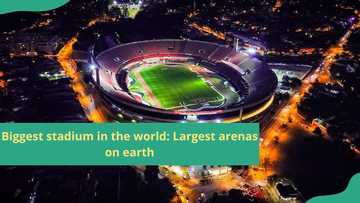
If you are a sports enthusiast, nothing beats the energy of being at a fully packed stadium, cheering your favourite team. While clubs and countries have invested heavily in venues like India’s Narendra Modi Stadium and the United States’ Michigan Stadium, Professor G. Keith Still, a renowned expert in Crowd Science, points out that the profitability of the world’s biggest stadiums is often minimal compared to their massive construction costs.
Source: UGC
TABLE OF CONTENTS
Key takeaways
- The top 10 biggest stadiums in the world all have a seating capacity of over 100,000.
- Rungrado 1st of May Stadium is the biggest stadium in the world by area, spanning approximately 20.7 hectares
- The United States has the highest number of large stadiums around the world, housing eight out of the top ten arenas, fuelled largely by American college football and other major sporting leagues.
- The relevance of ultra-large stadiums in the future depends on the prioritisation of economic sustainability.

Read also
CAF officials storm Nigeria as NFF comes under spotlight over plans to host major tournament
10 biggest stadiums in the world
Have you ever wondered how many people the largest stadium in the world can accommodate? Seating capacity is a critical determinant in establishing an arena’s size. Here are the biggest stadiums worldwide, starting with the one with the highest seat capacity.
1. Narendra Modi Stadium

Source: Getty Images
- Seating capacity: 132,000
- Location: Ahmedabad, Gujarat, India
The stadium was formerly known as Sardar Vallabhbhai Patel Stadium before being renamed Narendra Modi Stadium. It is located in Ahmedabad, Gujarat, India, and its construction was completed in 1983. Narendra Modi Stadium has had multiple modifications, including doubling its initial seating capacity to its current 132,000 seating capacity.
The arena hosted the Namaste Trump tour on 25 February 2020, when former US president Donald Trump visited India. The stadium hosted the 2011 Cricket World Cup. It is also the second stadium to host the maximum ODI matches, having hosted 23 ODI matches.

2. Rungrado 1st of May Stadium
Source: Getty Images
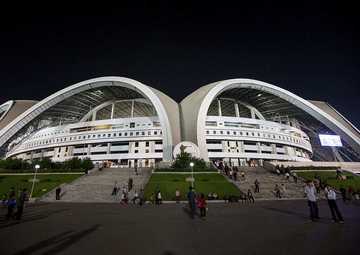
- Seating capacity: 114,000
- Location: Pyongyang, North Korea
The arena is on Rungrado Islet in the Taedong River, Pyongyang, North Korea. Its construction was completed in 1989 and was inaugurated on 1 May the same year. Therefore, its name comes from its location and the day it was inaugurated. It is also considered the biggest stadium in the world by area, covering approximately 20.7 hectares.
Even though it has a 114,000-seat capacity, it recorded attendance of up to 190,000 in 1995 when it hosted a wrestling event. The arena serves as a venue for various activities, with sporting events being the majority. Rungrado 1st of May Stadium is famous for hosting Arirang, the sport with the largest number of participants, recognised by the Guinness World Record.
3. Michigan Stadium
Source: Getty Images
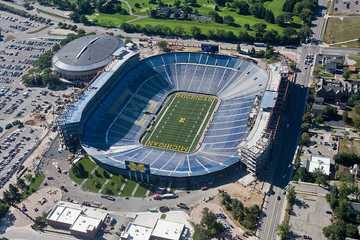
- Seating capacity: 107,601
- Location: Ann Arbor, Michigan, United States
Located in Ann Arbor, Michigan, Michigan Stadium is the largest in the United States, with a seating capacity of 107,601. It is nicknamed The Big House and previously had a seating capacity of 72,000 when it was built in 1972. In some events, the arena has recorded an attendance way above its official capacity.

Read also
AFCON 2025: Top FA chair explains why Super Eagles couldn’t lift trophy despite dominating matches
The arena is home to the University of Michigan Wolverines and is majorly used for hosting college football games. The arena hosted the 2014 International Champions Cup and the 2014 NHL Winter Classic.
4. Beaver Stadium
Source: Getty Images
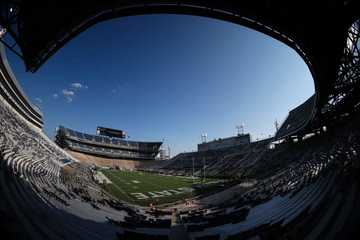
- Seating capacity: 106,572
- Location: State College, Pennsylvania, United States
Beaver Stadium gets its name from James A. Beaver, a former governor of Pennsylvania. The arena was launched in 1960 and has undergone multiple renovations and expansions, significantly changing its image. Located in State College, Pennsylvania, it is the second-largest stadium in the United States, with a seating capacity of 106,572.
The arena hosts numerous sporting and non-sporting events, but is famous for college football games. Occasionally, it records above-official capacity attendance, such as in September 2018, when 110,889 people occupied it.
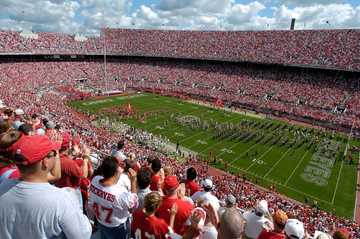
5. Ohio Stadium
Source: Getty Images
- Seating capacity: 102,780
- Location: Columbus, Ohio, United States
Ohio Stadium is in Columbus, Ohio, United States, and belongs to the Ohio State University. It is designed as a horseshoe, earning its nickname The Horseshow. It was open for use in 1922 with a seating capacity of 66,210, and after multiple expansions, its capacity is 102,780.

Read also
AFCON 2025: Senegal submits official petition to CAF ahead of final vs Morocco
The arena is the home of the Ohio State University Buckeyes. It is one of the major grounds for holding college football games. Occasionally, its attendance exceeds its official capacity. Initially, it was used for athletics and soccer events, but lately, it no longer hosts athletics.
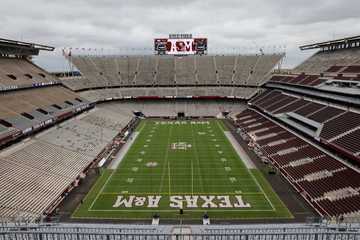
6. Kyle Field
Source: Getty Images
- Seating capacity: 102,733
- Location: College Station, Texas, United States
Nicknamed Home of the 12th Man, Kyle Field is in College Station, Texas, United States. It was built in 1927 and has an official seating capacity of 102,733. It is the sixth-largest stadium in the world and the fourth-largest in the United States.
The arena hosts several activities, but is popular with American football games. It is the home ground of Texas A&M University Aggies. In October 2014, the venue recorded the highest-ever attendance of 110,633 for the Texas A&M University Aggies vs. Ole Miss match.
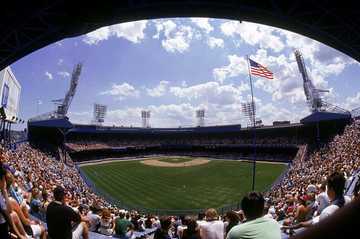
7. Tiger Stadium
Source: Getty Images
- Seating capacity: 102,321
- Location: Baton Rouge, Louisiana, United States
Tiger Stadium is in Baton Rouge, Louisiana, United States, with an official seating capacity of 102,321. It hosts American football games and is famous as Death Valley due to its intimidating atmosphere, making it difficult for visiting teams to win. The seventh-largest arena worldwide had an original capacity of 12,000; after modification, it attained its current capacity.

What events take place at Tiger Stadium? It mainly hosts college football games, with the Louisiana State University Tigers being the home team. Attendance has exceeded its official capacity a few times, reaching over 100 thousand. It famously hosted the first National Championship for High School football in 1938 and the 1974 and 1975 NCAA Division II Grantland Rice Bowl.
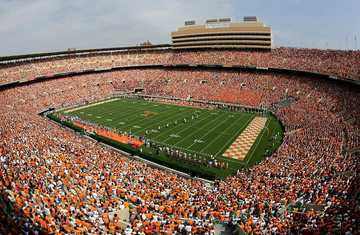
8. Neyland Stadium
Source: Getty Images
- Seating capacity: 101,915
- Location: Knoxville, Tennessee, United States
Neyland Stadium was named after the former legendary football coach of the University of Tennessee, Robert Neyland. It is located in Knoxville, Tennessee, United States, with a seating capacity of 101,915. It is one of the few arenas that has undergone modifications to reduce its capacity from 104,079.
It is also mainly used for college football games, serving as home ground for the University of Tennessee Volunteers. In a match played at the arena in September 2014, attendance reached an all-time high of 109,061. Billy Graham’s 1970 crusade is one of the major non-sporting events held at the arena.
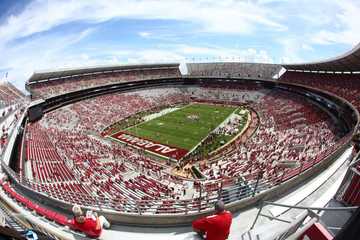
9. Bryant–Denny Stadium
Source: Getty Images
- Seating capacity: 101,821
- Location: Tuscaloosa, Alabama, United States
Bryant-Denny Stadium is in Tuscaloosa, Alabama, United States, with a seating capacity of 101,821. It was formerly Denny Stadium, named after the former president of the University of Alabama, George H. Denny. However, in 1975, the name was modified to include Bryant, a legendary coach at the university.

Read also
Biggest church in the world: top 10 largest buildings ever
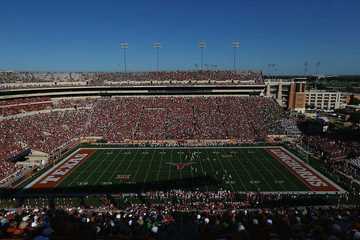
10. Darrell K Royal-Texas Memorial Stadium
Source: Getty Images
- Seating capacity: 100,119
- Location: Austin, Texas, United States
Darrell K. Royal-Texas Memorial Stadium is sometimes called the DKR. It comes in the ninth position in the list of the largest stadiums in the world, with a seating capacity of 100,119. The DKR is located in Austin, Texas, United States, and opened in 1924. The arena derives its name from the legendary football coach Darrell K. Royal and the Texans who perished in World War I.
Its original capacity was 27,000 in 1924, and after multiple expansions, it attained its current capacity. It is another American arena that hosts college football games and is home to the University of Texas at Austin Longhorns. It is the annual Austin Bowl game venue and has held other major events, such as the 1974 music concert.
Who bears the cost of building the world’s biggest stadiums?
Building and maintaining ultra-large stadiums can be expensive, and the return on investment (ROI) can be surprisingly low. Professor G. Keith Still, a renowned expert in Crowd Science, explains that even in global major events like the Olympics can struggle to generate profits from these venues. He said:

Read also
Youthful, gaming-obsessed Saudi seeks homegrown hit
The costs often depend on the investment. For example, Olympic events are often borne by government agencies, and since these agencies are not geared up to run/manage the venues, the facilities are sold off to commercial groups, often resulting in very poor ROI for the initial public investment (building).
The hidden challenge of big stadiums: filling seats
Moving away from the construction costs, Professor Still points out that the biggest challenge facing ultra-large stadiums is seat occupancy, not the design. He said:
Smaller venues can host a wide range of smaller events, while larger stadiums can find it difficult to fill their seats. There are only a handful of performers who can attract large crowds. Hence, the larger venues can find the economics challenging.
Will ultra-large stadiums remain relevant in the future?
With changing trends in sports, concerts, and live entertainment, the future of “biggest stadiums” may be shifting. Professor Still explains that these stadiums can remain relevant only if they focus heavily on economic sustainability.
FAQs
- Which is the biggest football stadium in the world? The Rungrado 1st of May Stadium is the biggest football stadium worldwide, with a seating capacity of 114,000.
- Which is the biggest stadium in Europe? The Camp Nou stadium, belonging to the Barcelona football club in Spain, is the biggest in Europe.
- Which is the biggest stadium in Africa? First National Bank Stadium in South Africa is the biggest stadium in Africa, with a capacity of 94,736.
- What is the seating capacity of the Camp Nou stadium? The arena has a seating capacity of 99,354.
- Which country has the largest stadiums in the world? The United States of America has the biggest stadiums in the world.
- What is the capacity of the biggest stadium in the world? Narendra Modi Stadium’s capacity is 132,000.
- Which country has the biggest stadium? India has the biggest arena in the world, Narendra Modi Stadium.

Read also
Uber to roll out electric Okada in Nigeria, Kenya as Lagos issues new rules for light rail
Which is the biggest stadium in the world? Many countries are investing in stadiums, aiming to host major world tournaments in the future. While new arenas are being built, old ones are modified and expanded, resulting in changes in their capacities.
Legit.ng published a list of beautiful stadiums in the world. When stadium sizes do not matter, then their beauty matters. Modern arenas are built with the best technologies, making them spectacular arenas.
The beauty of an arena entails multiple things, including facilities and amenities. Choosing the most beautiful one can be challenging, but this compilation has stadiums worth visiting.
Source: Legit.ng