

- The United Arab Emirates has confirmed its air defences are intercepting missiles and drones launched from Iran
- Fujairah officials reported that an Iranian drone strike caused a fire at an oil facility, though no casualties were immediately recorded
- The UAE remains the most heavily targeted nation in Iran’s retaliatory campaign, facing more than 2,800 missile and drone attacks before a temporary ceasefire in April
The United Arab Emirates (UAE) has confirmed that its air defence systems are actively intercepting missile and drone attacks launched from Iran.
The Ministry of Defense announced late on May 5 afternoon that it was targeting ballistic missiles, cruise missiles, and drones across the country.

Source: Getty Images
Fujairah oil facility fire from Iranian drone
In Fujairah, officials reported that an Iranian drone strike caused a fire at an oil facility. The Fujairah Media Office stated: “Civil defence teams were deployed immediately to contain the blaze.” There were no immediate reports of casualties following the incident.
Read also
Breaking: US breaks silence over claim Iran struck its warship near Strait of Hormuz
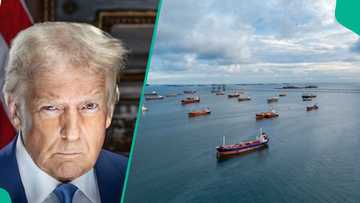
Earlier on May 5, the UAE strongly condemned an Iranian drone strike on an ADNOC oil tanker in the Strait of Hormuz. The attack came as the United States announced plans to begin guiding ships through the blockaded waterway.
Iran’s retaliatory strikes target UAE
The UAE has been the most heavily targeted country in Iran’s retaliatory campaign linked to the ongoing US and Israeli war. Between February 28 and April 8, Iran fired more than 2,800 drones and missiles at the UAE before a temporary ceasefire took effect.
At the time of reporting, Iran had not issued any official comment regarding the latest strikes.
US-Israeli war on Iran
The war between the United States, Israel and Iran began with direct strikes on Iranian territory in late February 2026. These attacks killed Iran’s Supreme Leader Ayatollah Ali Khamenei and destroyed several military sites, sparking a wave of retaliation from Tehran.

Read also
Two US service members have gone missing in Africa, officials say
Iran responded by launching missiles and drones against US bases and Israeli cities, but the conflict did not remain contained.
Neighbouring countries quickly became drawn into the fighting. Hezbollah in Lebanon fired rockets into Israel, while the Houthis in Yemen launched missiles in support of Iran. Gulf states such as the United Arab Emirates were also hit, with oil facilities and shipping routes targeted. The Strait of Hormuz, a vital global trade passage, was blockaded, causing energy prices to surge worldwide.
The escalation has created a humanitarian crisis, with thousands killed and millions displaced across the region. Civilian infrastructure has been damaged, and the disruption of oil exports has shaken global markets.
Analysts warn that the war has entrenched instability in the Middle East, making a quick resolution unlikely. What began as a direct confrontation between the US, Israel and Iran has now evolved into a regional conflict with far-reaching consequences.

Source: Twitter
UAE opens 10-year golden visa to Nigerians
Legit.ng earlier reported that the United Arab Emirates (UAE) has unveiled a new Golden Visa pathway offering 10 years of renewable residency to Nigerians and other international contributors who financially support Islamic endowment (Waqf) or humanitarian initiatives.
The landmark announcement, made at the GITEX Global 2025 event in Dubai, marks a major expansion of the UAE’s long-term residency programme and deepens the country’s commitment to global philanthropy and sustainable social impact.
Source: Legit.ng